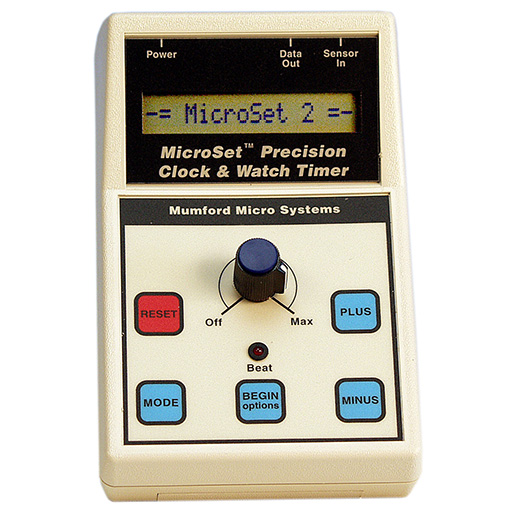
A Programmable Controller / Intervalometer for Digital Cameras and Electronic Flashes
The Time Machine is no longer available. I stopped making them in 2019.
The Mumford Time Machine is a programmable controller and intervalometer for special photographic effects. It allows you to trip the shutter of your camera or fire an electronic flash at regular intervals (time lapse), at specific times of day, or in response to trigger events. These trigger events can be sound, light, motion, or electrical signals. A wide variety of sensors and other accessories are available for use with the Time Machine for use in the studio or as a camera trap for wildlife. We’ve been making the Time Machine since 2001 and it’s now being used by thousands of professional and amateur photographers, and on every continent.
The Time Machine is exceptionally easy to use due to its keypad and LCD screen. All parameters are entered with easy-to-understand text on the screen so you can clearly see what your time lapse interval is, how many exposures have been taken, or what your delay settings are. The Time Machine runs on an internal 9 volt battery, so it does not need to be tethered to an electrical outlet.
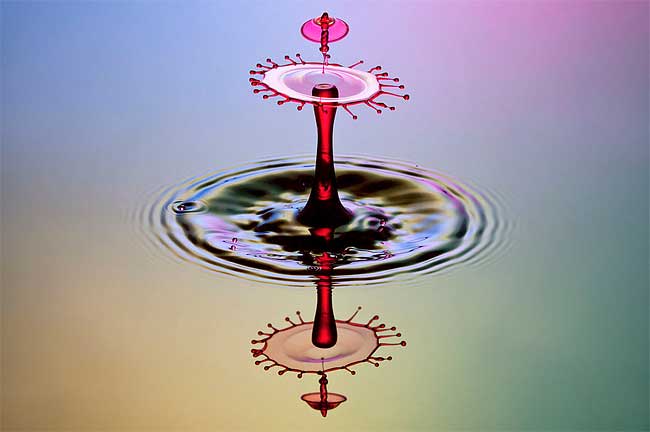
Water Drops
The Time Machine and Drip Kit make water drop collisions easy to capture. Press one trigger button and the shutter opens, the drops fall, and the flash fires at an exact instant to capture the image you want. Click the image to see more examples.

Nature Photography
The Time Machine can trip the camera shutter, trigger a flash, or start a movie camera when a creature moves for camera trapping projects. Laser, Infrared, Sound, and Motion sensors are available.

Time Lapse
The Time Machine allows you to take a series of pictures at regular intervals or at specific times for time lapse projects. There are many subjects for time lapse, including clouds, plants, and construction projects. We also have motion control components for panning projects.
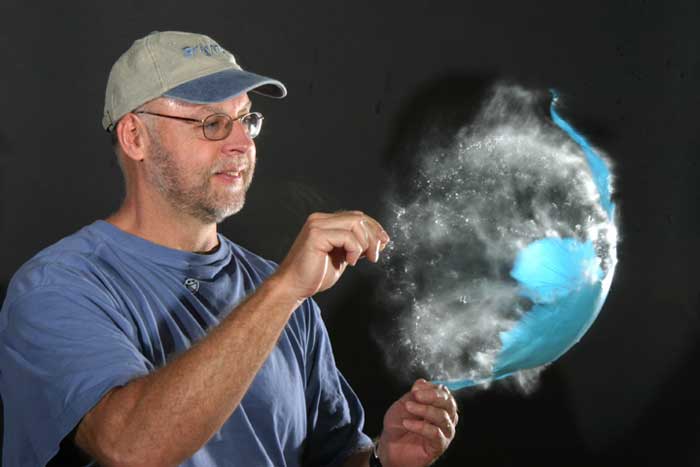
High Speed Photography
For events that are too fast to see normally, you can configure The Time Machine to trip an electronic flash in a dark room while the camera shutter is held open. This will freeze motions that are just a blur to our eyes, like popping balloons or water drops.
The programmable features of the Time Machine also make it useful for other exotic and creative applications like Triggered Timelapse, Ballistics, and Software Streak photography.
The Time Machine has a variety of programmable delay times that allow you to determine precisely when an exposure will be made in relation to the trigger event. It can time delays as short as ten microseconds or as long as 24 hours.
When used as an intervalometer, you can program The Time Machine to take exposures at specified intervals or at specified times, and exposures can be restricted to just daytime or nighttime. Its internal 24 hour clock is hand calibrated to an accuracy of better than 4 or 5 parts per million, which is better than two seconds per week.
The Time Machine will run on its internal battery for a couple of days, or you can plug it into an external 12 volt battery for field work or use it with the included AC adaptor. Optional adaptors are available for customers outside the U.S.
A variety of sensors are available for The Time Machine including acoustic sensors, optical sensors, motion detectors, a laser beam, or crossed-beam optical sensors with infrared or laser light.
If you have questions about The Time Machine, please send me an email or call.